Using GenAI to Optimize Case Study Creation Without Losing Editorial Control
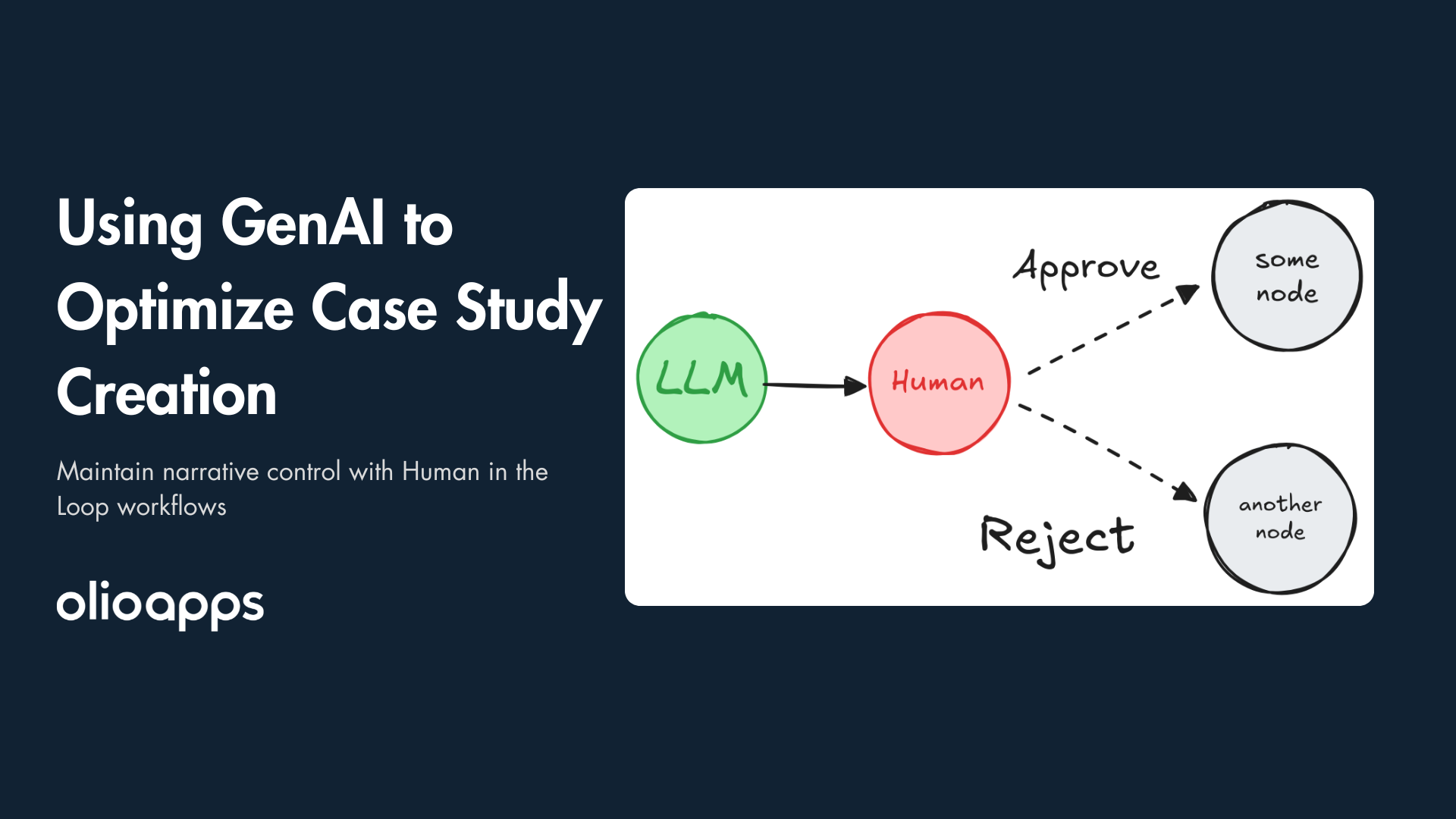
Case studies are high-value content, although they are challenging to produce consistently. Translating project delivery into a compelling narrative is its own skillset, requiring the appropriate context, framing, and time spent editing. Many teams even report that documenting their outcomes is harder than delivering the work itself.This is where the value of GenAI appears. Instead of treating LLMs as standalone writers, we treat them like tools that help reduce cognitive load by architecting repeatable, efficient editorial workflows. By having the human in the loop drive the process, the LLM assists a traditionally manual process of planning with accelerated iteration and research.We reduce the time to value of our case study writing by 80%, but the real value of utilizing GenAI in our case study process extends far beyond the time we earn back.
The Hidden Cost of Case Studies
Delivery and narrative storytelling require different skillsets and a case study requires both. It explains the problem, models a solution, describes execution, and reports on a measurable outcome and its impact for the client. This takes time to figure out if your company doesn't have a clear customer segment it's speaking to, if your case study is trying to appeal to multiple segments, or you haven't figured out your preferred narrative structure.At first, leaning on AI to speed up the entire case study writing process seems like an appropriate solution, but LLMs are unable to edit a full draft or write full case study sections that weave together a compelling narrative or speak to customer problems. Too many goals mixed together in a single prompt means the LLM quickly loses focus, requiring large sections of the case study to have a manual rewrite.
Planning Before You Prompt
By defining the narrative of the case study and its major takeaways before writing begins, not only improves the case study, but serves as an approved source of truth to feed back into the prompt of our LLM.By outlining the project narrative, our client's pain points, their challenge, and our solution's outcomes, the appropriate structure is given to the LLM and defines guardrails for our human in the loop to know if the case study is going off track.We find this pattern significantly improves the outcome of all LLM assistance in the case study process.We invest time scoping projects because technical structure drives customer outcomes. Applying that same structure to case study creation helps the LLM perform better.
Separating Cognitive Tasks
Case studies provide a natural inflection point for companies to reflect on their projects and gain insights regarding their own skillsets, shortcomings and competitiveness in their market, a cognitive complexity LLMs can fail to fully understand.In this process our teams are rapidly synthesizing notes, summarizing documents, identifying project themes, and extracting market signals to situate the project's impact. Initially, telling an LLM to combine all of these steps together reduces its ability to produce reliable, accurate results that fit our narrative goals. Breaking each into its own separate prompt and workflow allows us to reach our objective.
Extracting Market Insight from Client Deliverables
Once we articulate the deliverable and client outcome in the case study, it's relatively effortless to extract additional market insights. The finished case study and key deliverables are the input for LLM powered research, evaluating whether the delivery of our project mirrors growing market needs or not.Of course, asking the LLM to cite its sources and giving them a manual review is essential to this workflow. This is not a step previously integrated into our case study creation process so figuring out a way to integrate Business Intelligence research into this workflow is a pure value add.
Developing a Consistent Process
Our GenAI workflow is contingent on a human-in-the-loop paradigm, where a lead individual reviews and approves each step of the LLM's output. We find sticking to a consistent pattern of human review with LLM collaboration dramatically improves results.Switching tools and design patterns creates friction that stalls progress and demands we re-tune ourselves to match a different interaction style. By establishing a rhythm behind planning the narrative, prompting with a single objective, critically reviewing output, and feeding that back into the system, we create a process that works for our business.
Using AI As Interviewer
An unexpected aspect of the workflow involves using the LLM to interview us in order to expedite case study creation. It is sufficient in its ability to ask pointed questions on clarifying questions about project tradeoffs, design decisions, and clarifying outcomes.This mirrors collaborative writing dynamics at our company, with the AI taking the role as junior team member rather than just a technical tool. Our team finds that their creativity is sparked in a similar way comparable to working with a fellow team member, showing that AI writing collaboration has long term potential.
The Value Beyond Speed
Although utilizing GenAI improves the speed of our case study generation process by 80%, the major value we see is this novel process that leverages the strengths of GenAI while mitigating its downsides. Clearly stating guardrails, providing the narrative constraints to the LLM, and using it to separate and execute discrete tasks for the case study one by one allows us to create an output that was faster, better, and spoke to the challenges our customers need to overcome.Ultimately, commitment to this single workflow and its gradual refinement allows us to reach these benefits, letting our team focus more on strategic storytelling rather than the technical components of case study production.
Josh Proto
Cloud Strategist
Josh is a Cloud Strategist passionate about helping engineers and business leaders navigate how emerging technologies like AI can be skillfully used in their organizations. In his free time you'll find him rescuing pigeons with his non-profit or singing Hindustani & Nepali Classical Music.