
OlioApps + Throwback Studios
Scaling a Viral VR Game
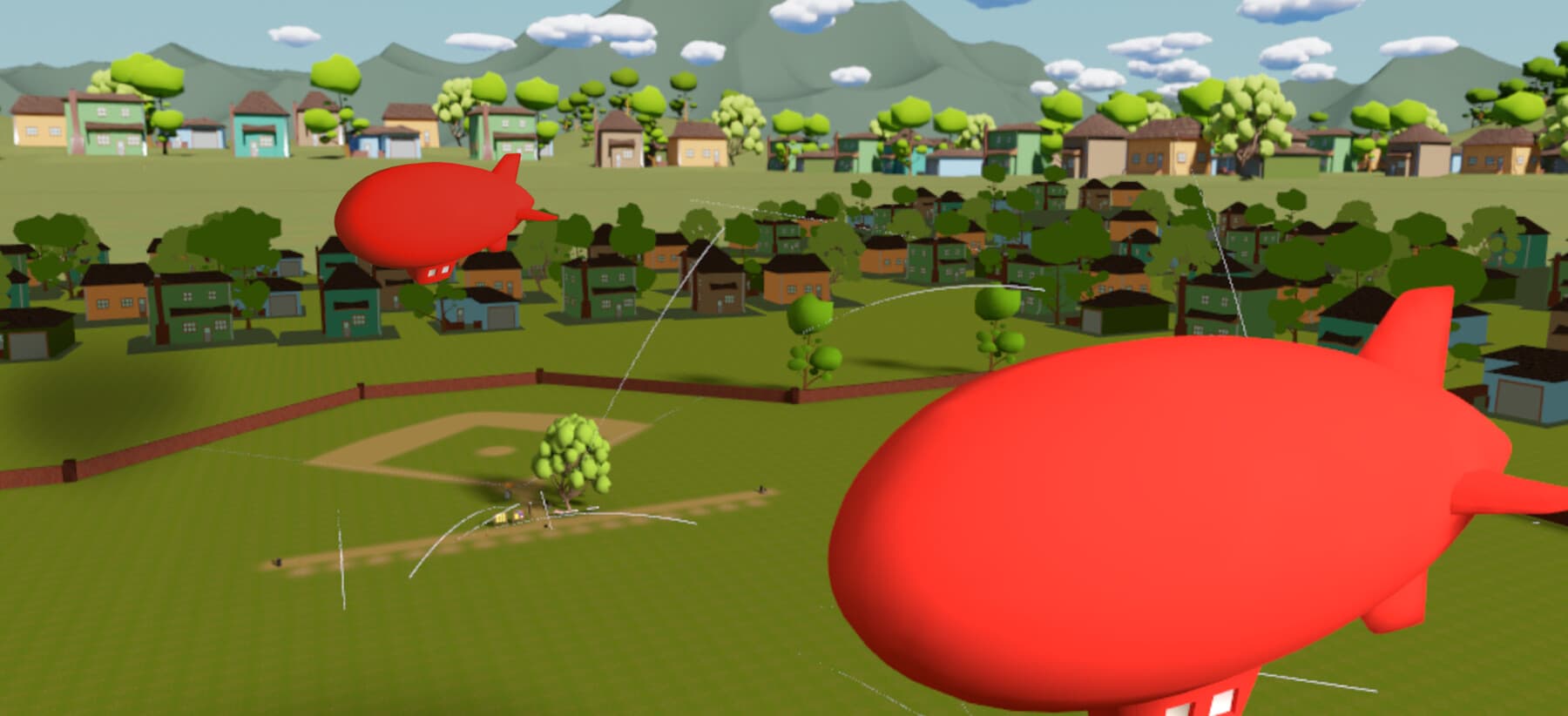

The Challenge
Explosive player growth triggered device instability and threatened the game’s momentum.

The Solution
Rapid development of a scalable infrastructure and intelligent room allocation.

The Result
Smooth scaling during viral growth and profitable sustainable operations.
When Growth Becomes a Crisis
Throwback Studios had exactly the problem every startup dreams of.
Players loved their VR baseball game, Derby, for its immersive batting practice, the social mini-games where friends competed to hit the most home runs, the ability to see and hear each other's gameplay in real-time. Derby climbed high in Meta's VR game rankings, generating buzz and attracting waves of new players.
Then the virality started… and so did the crashes.
Derby Baseball went viral on TikTok. 4.6 million views in 24 hours. Their servers were overrun with players.
Players would enter a game session only to have their VR headsets freeze and crash. Game sessions ended abruptly. The very popularity that Throwback had worked so hard to build was threatening to stall their momentum just as the game was taking off.


“When your product goes viral, you wish you could call in a special forces team to rescue you and your team from the tidal wave that has come crashing down over you and your team. Nothing worked, everything was fragile and being pushed to its limits way sooner than we expected. We called Olio in our time of need. We were about to lose our moment. Olio stepped in, stabilized the game, and helped us turn a viral spike into a real business.”
Jordan Kutzer
Founder, Throwback Studios
The Technical Challenge
The root cause was deceptively simple. Derby ran entirely on users' VR headsets with no production backend. For player-to-player communication, Throwback relies on Normcore, a third-party platform that organizes players into virtual “rooms.”
Normcore was a great fit during Derby's early growth, allowing the team to validate the experience quickly without heavy infrastructure investment. As player concurrency surged far beyond initial assumptions, new backend capabilities became essential. Throwback continues to use Normcore to this day for multiplayer services and voice chat.
The success of Derby came quickly. And pretty soon, each room could only handle 14 concurrent players before the data transfer between headsets became unstable. Beyond that threshold, devices would crash.
Additionally, Throwback had no backend infrastructure to even track who was playing, let alone control where they went. There was no user identity system, no account infrastructure, no way to implement matchmaking or load balancing. Every player was essentially anonymous, and every room assignment was a roll of the dice.
The game was experiencing explosive growth at exactly the moment when its technical foundation was most fragile.
Building a Backend at Breakneck Speed
Olio Apps came in with a clear mandate: fix the crashes fast, before the momentum died. But the solution couldn't just be a quick patch. It needed to be a production-quality foundation that could support Throwback's growth long-term.
The team moved quickly to build what Throwback had never had: a proper backend infrastructure. This meant creating a user identity and tracking system, so the platform could finally know who players were and where they were in the game.
But the real innovation was in how Olio approached the room allocation problem.
Instead of just preventing overload, which would have been enough to stop the crashes, the team designed an algorithm that actually enhanced the player experience. We implemented a “most popular first” strategy.
Here's how it worked: Rather than randomly scattering players across many rooms, the algorithm filled rooms sequentially to their 14-player capacity. It prioritized the most popular fields first, creating new fields only when existing ones reached capacity. As players left, the system dynamically consolidated rooms to keep active fields feeling full.
Example: 50 Players Online (Off-Peak)
Instead of scattering 50 players across 10+ half-empty fields, the algorithm packs them into 4 vibrant fields.
The result? Even during off-peak hours when only 50 players were online, those players weren't isolated in scattered, empty-feeling rooms. They were grouped into three or four vibrant fields where they could interact, compete, and feed off each other's energy.
It was a solution that solved both the technical crisis and elevated the social experience that made Derby compelling in the first place.
From Crisis Management to Long-Term Partnership
The immediate impact was dramatic. Room crashes from overload stopped entirely. The game smoothly handled the surge of concurrent users, and Throwback could finally capitalize on their popularity spike without technical barriers undermining growth.
But what started as emergency crisis management evolved into a two-year partnership.
As Derby stabilized, Olio continued building. The platform added player progression tracking, and enhanced social features that kept players engaged. The infrastructure supported the continuous evolution of new features, new game modes and new ways for players to interact, all while maintaining stability of the game play.
Throughout, Olio worked within Throwback's budget constraints, providing responsive support and maintaining a “move fast, but don't break things” philosophy that aligned with the startup's needs.
The game achieved profitability and has sustained operations with a small team. This is proof that the technical foundation was not just stable, but cost-effective and scalable.
“Olio didn't just fix crashes, they helped us scale the experience itself. They solved our critical scaling crisis, then stuck with us as a reliable technical partner for two years. Olio helped us survive our viral moment, then helped us build on it. Smart, responsive, and always available when we need them.”
Jordan Kutzer
Founder, Throwback Studios
The Difference Between Surviving and Thriving
For Throwback Studios, the Olio partnership was the difference between losing their moment and building on it. The viral growth that could have destroyed the game instead became its foundation.
The case illustrates a truth about scaling: Sometimes the most elegant solution isn't just about handling capacity. It's about understanding what makes the product work in the first place. Derby wasn't just a technical platform; it was a social experience. The matchmaking algorithm didn't just prevent crashes; it made small player counts feel vibrant and large player counts feel manageable.
Derby didn't just survive its viral moment, it became a sustainable, profitable platform built to grow.
Two years later, Derby continues to evolve on the stable infrastructure built during those critical early weeks. Players compete, practice, and hang out in virtual fields without thinking about the complex system keeping their experience smooth.
About Olio Apps
Olio Apps helps clients build, scale, and modernize SaaS and mobile applications. From technical debt remediation to AI integration to preparing applications for explosive growth, Olio brings startup speed with enterprise reliability. Learn more at olioapps.com.