
By Mukhtar Bahadory

Aug 19, 2026
By Mukhtar Bahadory
Aug 19, 2026
Why AI Prototyping Leads to Better Product Decisions
Designing software for complex workflows has always involved a degree of uncertainty. Traditionally, product teams would rely heavily on user stories, wireframes, mockups, and engineering estimates to communicate how an application should work. While these artifacts are valuable, that means that teams and stakeholders have to imagine how the final product will behave before working software exists. As a result, many important product decisions have historically been made before they could be validated with real users, using real software. AI-assisted development is beginning to change that.
At Olio Apps, we've found that AI-assisted development can affect more than the speed of code generation. It can also change how teams evaluate ideas, allowing them to test concepts earlier, involve more people in the development process, and make decisions based on working software rather than assumptions.
 Two solutions may look nearly identical in a design mockup while creating very different experiences once connected to real application data. Rapid prototyping allows teams to evaluate both the user experience and the engineering implications at the same time. Product decisions can be informed by more than the visual design. Teams can also evaluate usability, performance, scalability, and technical feasibility.
Testing Product Ideas Earlier
Once teams have access to working prototypes, they can evaluate product decisions based on actual user experiences rather than assumptions. Instead of debating how an interaction might work, stakeholders can experience it firsthand and evaluate different approaches before significant engineering effort has been invested. AI-assisted development has made it possible to evaluate ideas earlier in the process. Instead of spending weeks building a proof of concept, teams can create functional prototypes in hours. Rather than debating whether an interaction will feel intuitive, stakeholders can click through it and compare multiple approaches before committing engineering resources.Some Problems Only Reveal Themselves in Working Software
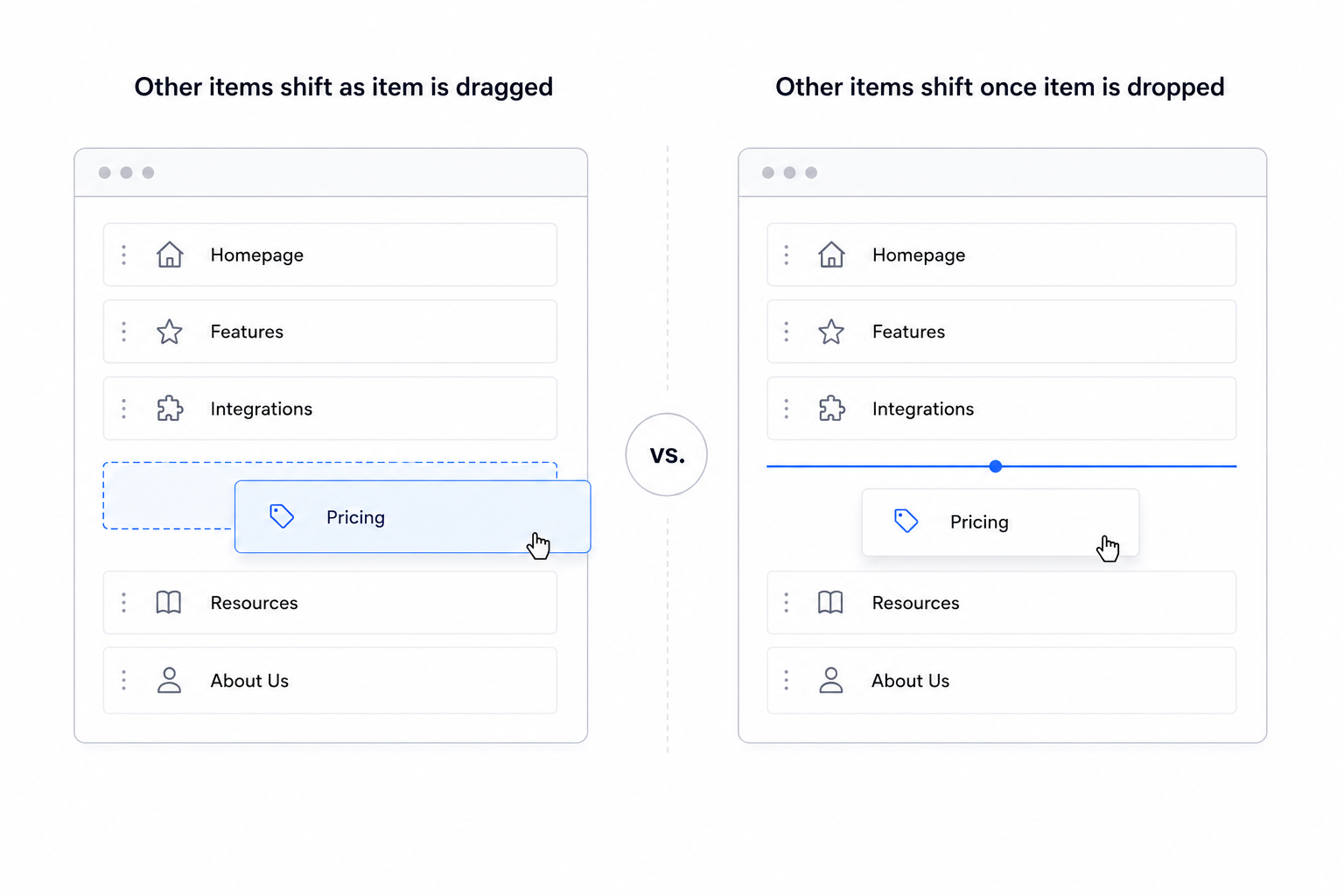
Take drag-and-drop functionality for example. On the surface, it seems simple. A user grabs an item and moves it somewhere else. In reality, that interaction involves a range of design and engineering decisions. Should surrounding items move while the user drags? Should the interface display a preview of where the item will land? How does the experience change when there are hundreds of items instead of ten? What happens to the underlying data as elements move?
Two solutions may look nearly identical in a design mockup while creating very different experiences once connected to real application data. Rapid prototyping allows teams to evaluate both the user experience and the engineering implications at the same time. Product decisions can be informed by more than the visual design. Teams can also evaluate usability, performance, scalability, and technical feasibility.
AI Makes Product Development More Collaborative
AI introduces an organizational challenge. Historically, engineers were responsible for translating design concepts into working software. Designers communicated interactions through static mockups, and product managers relied on documentation to explain desired behavior. Today, that process is becoming more collaborative. Designers can use AI-assisted development tools to build interactive prototypes, product managers can explore workflows earlier, and engineers can evaluate technical implications before implementation begins. Teams can work from the same interactive prototype, making it easier to identify usability issues, uncover technical constraints, and evaluate different approaches before significant development effort has been invested. This allows teams to collaborate on product decisions earlier, while ideas are still being evaluated and changes are less expensive to make.Great Prototypes Need Realistic Data
The value of a prototype depends in part on how closely it reflects the application it represents. Many design tools can demonstrate what an interface looks like, but they often can't show how it behaves when connected to real data, complex workflows, or larger datasets. Those connections can affect important product decisions, including how a feature should work and whether an approach is technically practical. By prototyping within the context of the application, teams can evaluate not only whether an interaction feels intuitive, but also how it performs when connected to representative data. They can identify scalability concerns, understand how workflows behave under real conditions, and uncover implementation challenges much earlier in the process. This creates better conversations between product, design, and engineering. Instead of discovering data or architecture constraints after a feature has been approved, teams can address those considerations while the experience is still evolving, reducing costly rework later in development.Speed Doesn't Replace Good Engineering
Rapid prototyping does not eliminate the need for engineering expertise. Engineers still need to evaluate how design decisions affect underlying data, application performance, and long-term maintainability. A prototype can reveal that an interaction works well from a user's perspective while introducing complexity elsewhere in the application. Engineers can help teams evaluate those tradeoffs before development begins. This is one reason engineering involvement remains important during the prototyping process. Moving quickly does not mean abandoning engineering discipline. It means applying that discipline earlier, while there is still time to make changes.Fast Iteration Requires Safe Experimentation
One of the biggest advantages of AI-assisted development is the ability to experiment safely. Instead of testing ideas directly in production environments, teams can quickly deploy prototypes into isolated preview environments using representative data. Designers, product managers, engineers, and stakeholders can all interact with realistic versions of the product without affecting customers or live systems. AI can also accelerate validation. The same context used to generate a prototype can help generate browser-based tests for key interactions, allowing teams to identify problems earlier in the process, before a feature moves into production development.Faster Prototyping Creates More Opportunities to Learn
Much of the conversation around AI focuses on developer productivity. While writing code faster certainly matters, we believe the larger opportunity is helping organizations learn faster. When teams can test ideas in hours instead of weeks, gather feedback earlier, and identify technical constraints before committing significant engineering resources, they have more opportunities to reduce uncertainty and make informed product decisions. This can improve the quality of decisions made before production development begins.Ready to Build Better Products with AI?
AI-assisted development is changing how teams prototype and evaluate product ideas. At Olio Apps, we help organizations use AI to prototype ideas faster, validate them earlier, and bring designers, product managers, and engineers together around working software instead of assumptions. If your team is exploring how AI can accelerate product development while reducing risk, we'd love to start the conversation.Mukhtar Bahadory
Lead Software Engineer
Mukhtar is a proficient full stack engineer with a liking for technologies like React, Node, and TypeScript. He puts great value and emphasis on organization and structure regarding code, people, and processes. In his free time, he enjoys reading, cooking, going on walks, and studying arbitrary topics like history, people, and algorithms.
Share This Post
Newsletter
Monthly updates, posts and podcasts.