
By Monica Borrell

Sep 24, 2026
By Monica Borrell
Sep 24, 2026
Why DTC Wellness Brands Lose Customers They Should Keep
And how technology can help brands become better partners in their customers' health journeys.
Customer acquisition is expensive. For Direct to Consumer (DTC) subscription wellness brands, that makes retention an important part of sustainable growth. But many brands still put most of their attention into getting customers to make a purchase. Once the order is placed, the customer experience often becomes a series of standard emails, shipping notifications, and renewal reminders.
That creates a gap. Wellness products often take time to produce noticeable results, which means customers may need several weeks to establish a routine, understand how to use a product, and decide whether it is working for them. If the brand does not support them during that period, customers can lose confidence before the product has had a chance to deliver its value. The result is higher churn, lower customer lifetime value, and more pressure to acquire new customers to replace the ones who leave.
For brands already investing heavily in acquisition, improving what happens after the first purchase can have a significant impact on the economics of the business.
The First Purchase Is Only the Beginning
Consider a customer who discovers a wellness brand through Instagram. She takes a quiz, places an order, and is excited to get started. The product arrives and she follows the recommended routine for a few weeks. Then life gets busy. She misses a day, then another, and is no longer sure whether she is using the product correctly or when she should expect to see results. The brand continues sending emails, but most of them are promotional. When the next shipment is due, she is unsure whether the product is making a difference and cancels. The product itself may not have failed. The customer may simply not have had enough information, guidance, or feedback to continue with confidence. This is where many retention problems begin.Why Wellness Customers Churn
Churn is usually the result of several smaller problems throughout the customer journey rather than one major failure. For wellness brands, four areas are particularly important.1. Customers Can't See Their Progress
Many wellness products produce gradual results, which makes it difficult for customers to know whether their investment is working. A customer may feel slightly better after several weeks, but without a baseline or a way to track changes, that progress can be difficult to recognize. This creates a perception problem. The product may be working, but the customer does not have enough evidence to feel confident about continuing. Brands can address this by creating simple feedback loops, such as a baseline questionnaire, periodic check-in, or progress summary. The goal is to give customers a clearer way to understand the results they are experiencing.2. Customers Don't Have Enough Guidance
A product label can explain what to take and when to take it, but it does not necessarily explain how the product fits into a customer's daily life. Customers may wonder whether they should take it in the morning or evening, what to do if they miss a day, when they should expect to notice a difference, or what they should pay attention to during the first few weeks. The more uncertainty a customer has, the harder it can be to maintain a new behavior. A more structured onboarding experience can answer these questions before they become reasons to disengage. It can give customers a clear schedule, explain what to expect, and connect the product to the goal that motivated the purchase in the first place.3. Customers Struggle to Build a Routine
Wellness subscriptions often depend on consistent behavior, and that is difficult to achieve. A customer may be highly motivated when she places her first order but have a very different level of motivation a few weeks later. Generic reminders can help, but they are not always enough to turn a new behavior into a routine. Brands can design the experience around the customer's existing habits. For example, instead of simply reminding someone to take a supplement, the experience can connect that action to something they already do every morning. Small changes like this can make it easier for customers to stay consistent.4. The Post-Purchase Experience Is Often Underdeveloped
For many brands, the customer journey is heavily optimized through the point of purchase. There are product pages, offers, quizzes and checkout flows designed to convert the customer. After the purchase, the experience often becomes much simpler: an order confirmation, a shipping notification, a few marketing emails, and eventually the next shipment or renewal. That leaves a large part of the customer journey without much product design behind it. The first few weeks after purchase are exactly when customers are forming habits, evaluating the product, and deciding whether they want to continue. That period deserves as much attention as the acquisition funnel.What a Better First 90 Days Can Look Like
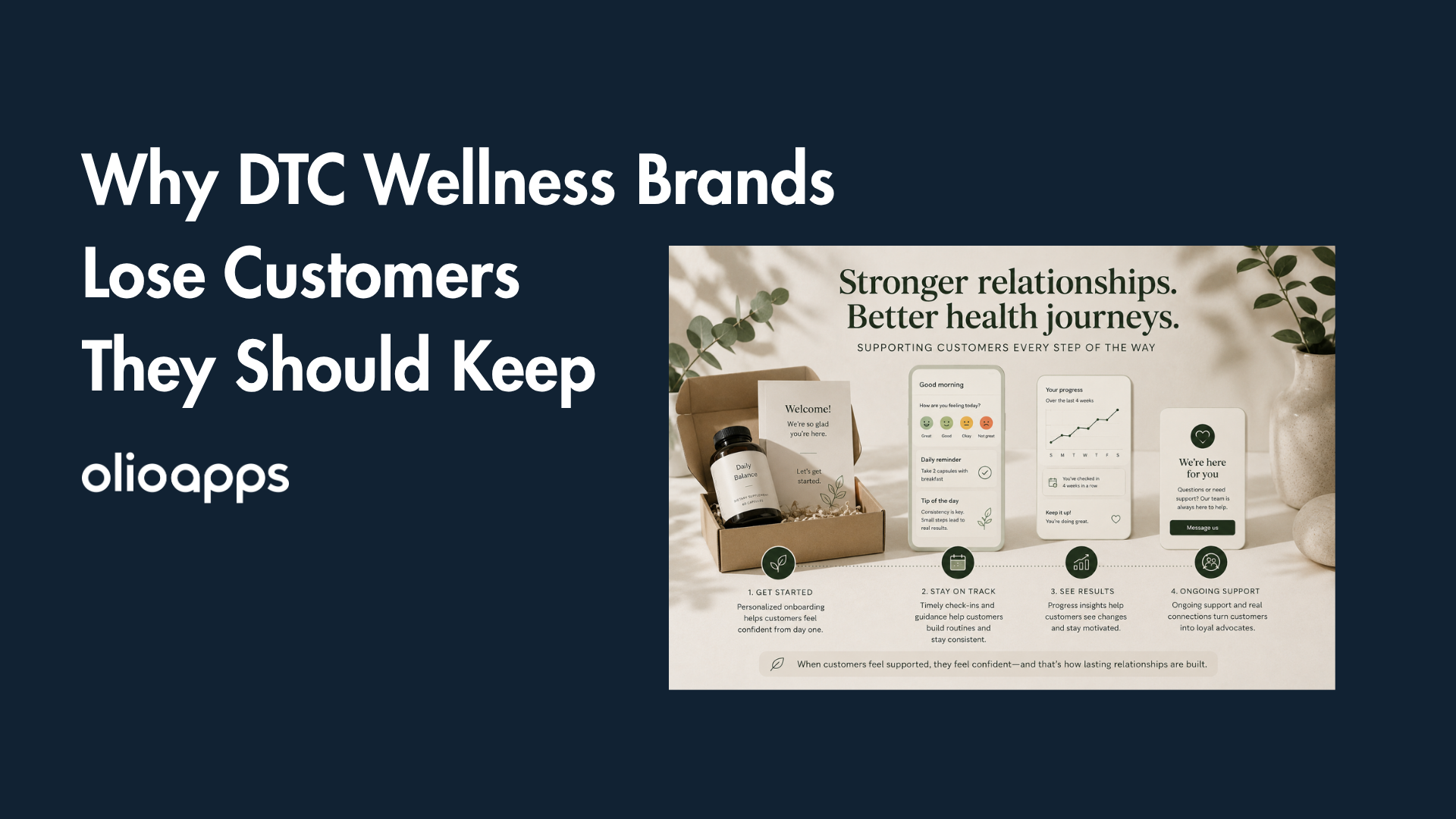
A stronger post-purchase experience does not have to be complicated. Before the order ships, a customer could complete a short intake that establishes her goal, current routine, and relevant baseline information. When the product arrives, she could receive a personalized protocol that explains how to incorporate it into her routine and what to expect during the first several weeks. A week later, the brand could check in with a simple question about how the routine is going. If the customer is struggling, the experience can provide practical guidance; if she is doing well, it can reinforce the behavior. At the end of the first month, the brand could show the customer how her current responses compare with her initial baseline. Before renewal, the brand can use that information to help the customer evaluate her progress and decide what she wants to focus on next. None of these steps require a fundamentally different product. They require a more intentional customer experience.The Challenge Has Traditionally Been the Cost of Building Personalized Customer Interactions
Most wellness companies already understand many of these retention strategies. They know that better onboarding matters, that customers need guidance, and that engagement between purchases matters. The challenge is turning those ideas into software. A personalized customer journey can require coordination between marketing, product, engineering, operations, and customer support. Building the underlying workflows can take months, particularly when they need to connect customer data across multiple systems. For a mid-market brand, that can make a worthwhile retention initiative difficult to prioritize because the economics may not justify dedicating a large team to building it from scratch. That is changing.Technology Makes Health Feel More Personal
Modern software makes it easier to build personalized customer experiences without requiring every interaction to be handled manually. Customer data can be connected across systems, workflows can respond to customer behavior, personalized content can be generated from structured information, and teams can test new experiences without committing to a large, long-term development project. This makes it possible to build more of the customer journey around the individual customer rather than relying entirely on the same experience for everyone. The important point is not automation for its own sake. The goal is to make better retention experiences practical at a cost that makes sense for the business. Technology can handle predictable interactions, while people can focus on the situations that require judgment or personal attention.Start With the Part of the Journey Where Customers Are Leaving
Brands do not need to redesign the entire customer experience at once. The first step is understanding where the largest retention problems occur. Look at the customer journey after purchase and ask:- When are customers most likely to cancel?
- How many customers make it to their second shipment?
- What do customers who stay do differently?
- What information are customers missing before they cancel?
Focus on the First 30 Days
For subscription businesses, the first month is an important point in the customer relationship. Customers are deciding whether the product fits into their lives, developing habits, and forming an opinion about whether the product is worth continuing. That makes the first 30 days a practical place to start. A structured onboarding experience can establish the customer's goals, explain what to expect, provide guidance, and create opportunities for the brand to identify customers who are struggling. These changes can be tested against retention data without requiring a complete redesign of the business.Make Progress Easier to Understand
The next step is helping customers understand whether they are getting value. This does not necessarily require a sophisticated health tracking application. A simple sequence of check-ins can provide useful information, while a baseline gives customers something to compare against and a progress summary can help them recognize changes that might otherwise be easy to overlook. For wellness brands, this can be especially important because the value of the product may take time to become apparent. The more clearly customers understand their experience, the easier it is for them to make an informed decision about continuing.Build on the Foundation
Once the first part of the customer journey is working well, brands can build additional experiences around it. That could include proactive renewal communication, better support for customers who become inactive, more relevant cross-sell recommendations, or loyalty programs. These initiatives can be valuable, but they work better when the basic customer experience is already strong. Adding another loyalty program will not solve a customer abandoning a product because she never understood how to use it. The priority should be fixing the underlying retention problem first.When Customers Feel Supported, They Stay
When customers feel like they have a partner in their health journey, they are more likely to stay engaged and loyal to a product. That sense of support can help customers feel more confident in their decision to continue, especially when results take time or building a new routine feels difficult. For brands, that loyalty can mean lower churn, higher customer lifetime value, and stronger long-term customer relationships.Building Better Customer Experiences With Olio Apps
At Olio Apps, we work with companies to design and build software that supports the customer journey after acquisition. That can include personalized onboarding, customer check-ins, progress tracking, behavioral workflows, and other experiences that help customers stay engaged with a product. We combine product strategy and software engineering to help companies move from an identified retention problem to working software without requiring a large internal development effort. The right solution depends on the product, customer, existing technology, and where customers are currently leaving. That is why the starting point should be the customer journey and the business problem, rather than a predetermined technology solution. For companies looking to improve retention, the first question is simple: where are customers leaving, and what would need to change to give them a reason to stay? That is where the opportunity starts. To see what this looks like in practice, read our Scoutwell case study, where we helped a wellness brand turn one-time purchases into long-term customer relationships with a digital engagement platform that lets customers track their sleep outcomes and see their progress over time.Monica Borrell
Director of Project Delivery
As the director of project delivery, Monica is passionate about making sure Olio's clients are fully supported. In her spare time, you can find her writing about leadership or enjoying hiking or paddleboarding around the Pacific NW.
Share This Post
Newsletter
Monthly updates, posts and podcasts.